God of Deliverance
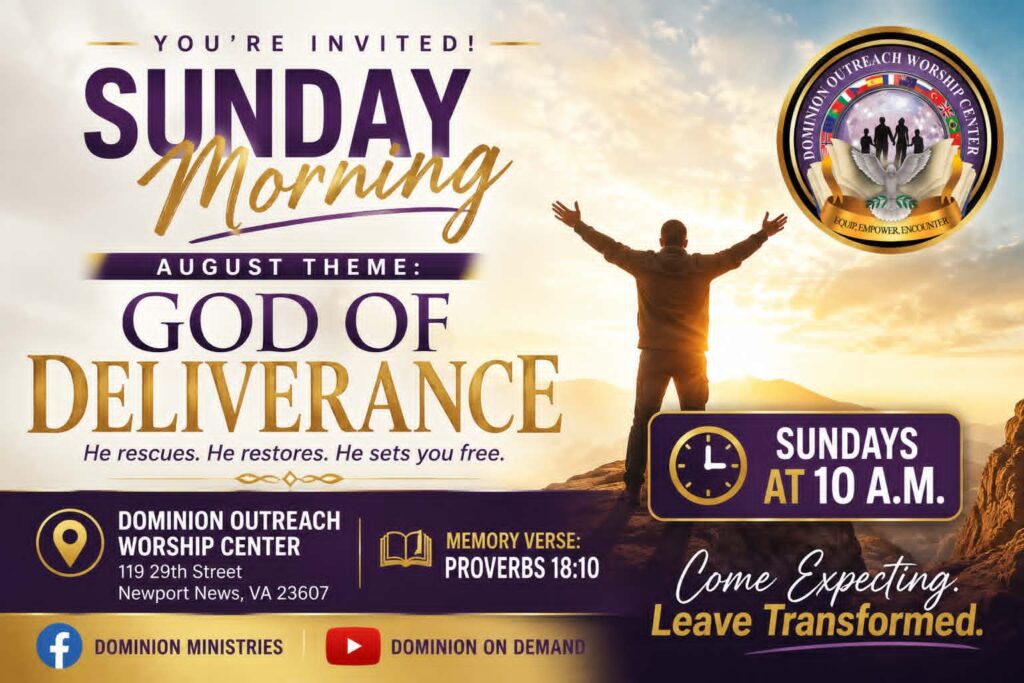
We often think of deliverance as a moment marked by miracles, signs, and wonders for their own sake. Yet in the believer’s life, deliverance interrupts repeated patterns of bondage, bruising, and brokenness that affect the mind, will, emotions, and soul. There are times when heaven intervenes against the enemy’s destructive plans for the faithful, and the God of heaven comes to our rescue. Our adversary seeks to afflict the soul—the mind, will, and emotions—with pain and suffering, creating patterns that can leave us, like the Apostle Paul, doing the very things we hate. But thanks be to God through our Lord Jesus Christ, who truly delivers us from them all. Join us this month as we walk in dominion and encounter the God of Deliverance.
8-2-2026 Deliverance at Death’s Door
Sermon Summary:
God alone is the source of deliverance, especially when trouble feels overwhelming and time feels like it’s running out. The sermon calls the church to stop putting ultimate trust in systems, people, or fear, and instead run to the Lord—because “the name of the Lord is a strong tower,” a refuge in the time of trouble, and a sure defense when the enemy comes in like a flood.
Using Isaiah 38:1–9, Dr. Raymond Johnson highlights King Hezekiah’s crisis: he was sick “near death,” received a hard word to “set your house in order,” and then responded by turning his face to the wall and praying. Hezekiah didn’t search for other sources of help; he cried out to God with honesty, devotion, and tears. God answered, saying He had heard the prayer and seen the tears, added 15 years to Hezekiah’s life, and promised to deliver both him and the city—showing that God can intervene in ways that defy logic and reverse what looks final.
A central takeaway is that deliverance is connected to a life of devotion and persistent prayer. The message warns that crises can tempt people into fear, bitterness, and unhealthy coping, but God calls believers to pray and not lose heart, to rest in their position in Christ, and to let God fight battles they can’t win in their own strength. When pressure rises, the posture is: worship, pray, and “get somewhere and sit down” in faith—declaring, “I shall live and not die,” and “I am delivered.”
The sermon also expands deliverance beyond the individual, urging intercession for families and community—particularly for sons and young people under attack, and for households facing grief, depression, and oppression. The church prays for protection, peace, and a turning of hearts back to God, trusting that even if it’s “darkness in Egypt,” there can be “light in Goshen” for those who belong to the Lord.
Finally, the message invites listeners to respond personally: turn to Jesus for salvation, confess and repent, and trust God’s forgiveness and cleansing. The month’s direction is framed as a process—Deliverance leading to Development and then Deployment—so God’s people can be strengthened, restored, and sent out to impact others with faith, worship, and a confident reliance on God’s power to rescue.
Powered By EmbedPress
God of Deliverance